Debunking the Climate Scam
Billions of Dollars -
Greedy Green Corporations -
No Warming For Two decades -
Bought and Paid For Organizations

5000 Years Of Climate Change From Greenland Ice Cores

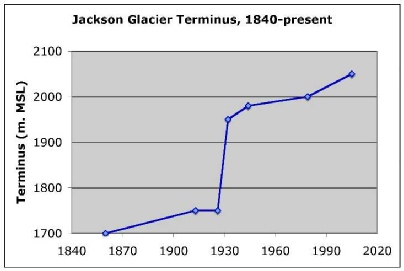
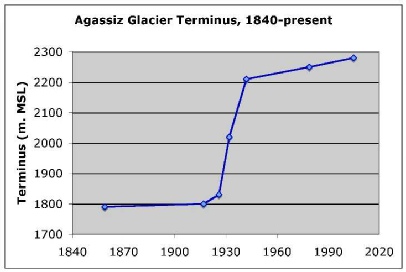
Are glaciers melting? Yes! But:
Look closer -
They have been slowly melting since, at least, the little ice age. In the 1930s the melting rate increased dramatically. Most of the melting occurred in that period. Slow melting resumed after the 1930s.
Claims of rapid glacier melting are 80-
Most Glacier Melting was in the 1930s
Greenland ice sheet the summer average temperature has decreased at the rate of 2.2 ◦C per decade
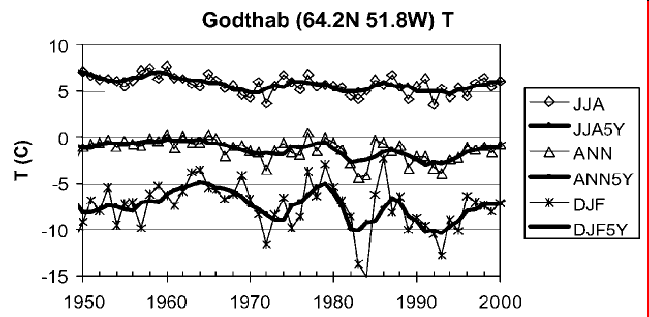
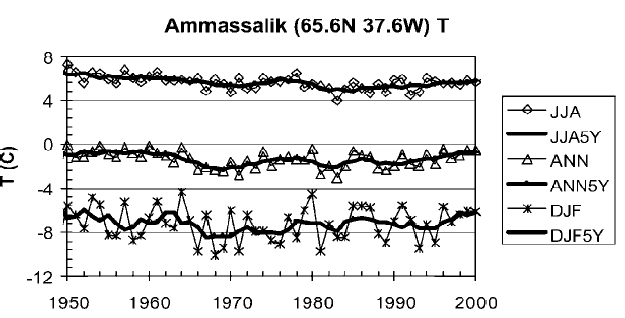
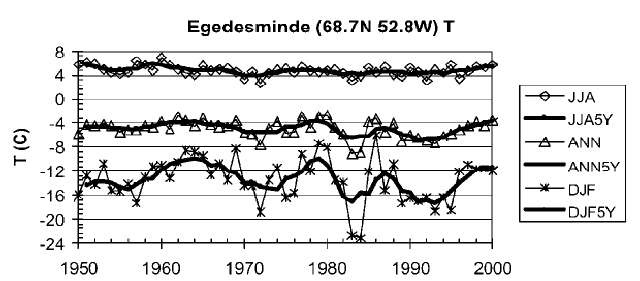
Since 1940, however, the Greenland coastal stations data have undergone predominantly a cooling trend. At the summit of the Greenland ice sheet the summer average temperature has decreased at the rate of 2.2 ◦C per decade since the beginning of the measurements in 1987. This suggests that the Greenland ice sheet and coastal regions are not following the current global warming trend. A considerable and rapid warming over all of coastal Greenland occurred in the 1920s when the average annual surface air temperature rose between 2 and 4 ◦C in less than ten years (at some stations the increase in winter temperature was as high as 6 ◦C). This rapid warming, at a time when the change in anthropogenic production of greenhouse gases was well below the current level, suggests a high natural variability in the regional climate.
(Climatic Change, Volume 63, Numbers 1-
Vanishing Ice Most Likely All Natural
From: http://wattsupwiththat.com/2014/12/16/vanishing-
video by Jim Steele, Director emeritus Sierra Nevada Field Campus, San Francisco State University
The video outlines why the timing and mechanisms of glacier retreats is evidence of natural climate change.
Contents
The drying out of Kilimanjaro
Retreat of glaciers in Glacier National Park begins 2:45
Overview of Holocene warming and cooling and ice melt begins at 4:22
The advances and retreat of the Aletsch Glacier and solar activity begins at 9:14
Ocean Oscillations and the retreat of Greenland Glaciers begins at 11:39
The unique locations and causes of retreating Antarctic glaciers begins at 17:39
A transcript with links to selected references is available here
A transcript with a list 61 citations is available here
Mt. Baker glaciers disappearing? A response to the Seattle Times
Guest Blogger / 2 hours ago September 13, 2015
The headline of the September 8, 2015 Seattle Times states:
‘Disastrous’: Low snow, heat eat away at Northwest glaciers
“Glaciers across the North Cascades could lose 5 to 10 percent of their volume this year, accelerating decades of steady decline. One scientist estimates the region’s glaciers are smaller than they have been in at least 4,000 years.” “The best word for it is disastrous,” said Pelto”
http://www.seattletimes.com/seattle-
This was a multi-
Photos and maps from a large collection dating back to 1909 document exactly what Mt. Baker glaciers have done in the past. What these photos and maps clearly show is the Mt. Baker glaciers reached their maximum extent of the past century in 1915 at the end of the 1880 to 1915 cold period. The glaciers then melted back strongly during the 1915 to 1950 warm period. The climate then turned cool again, and Mt. Baker glaciers advanced strongly for 30 years. In 1977, the climate turned warm again and since about 1980, glaciers have been retreating again. However, photos and maps prove that all Mt. Baker glaciers are more extensive today than they were in 1950. Here are a few examples.
Read the rest at: http://wattsupwiththat.com/2015/09/13/mt-
Mt. Hood Glaciers Retreating BEFORE 1926
(IPCC says that man’s CO2 had little effect before 1950)
In 1926 Fred Stadter discovered a prehistoric forest buried under a Mt. Hood glacier
that was being revealed due to the glacier’s retreat in recent years. This discovery
was profiled by E. T. Hodge in Vol. 13, No. 12: pp. 82-
In the September, 1946 Ore.-
"Today, the receding tongues of Reid Glacier have uncovered evidence that at one time in the not too distant past the glaciers suffered a shrinking back as profound as that now going on. Several years ago a buried forest was discovered on the ridge dividing Reid and Zigzag glaciers at an elevation of 6200 feet. The trees, now pressed flat and buried by glacial debris, measure from 1 to 3 feet in diameter. The nearest living trees of comparable size now grow far down in the valleys. Evidently the glaciers on Mt. Hood at one time receded until their snouts were far up on the mountain or had even vanished entirely for a time."
In 1991 Cameron and Pringle published an article in Oregon Geology (Vol. 53, No.
2: 34-
The "tree ring data" regarding glacier dynamics seems pretty clear. Glaciers have
been receding and growing for millennia: currently (on Mt. Hood at least) growing
smaller for over 100 years -
To say these effects have anything to do with Anthropogenic Global Warming seems impossible, given the evidence. To say they are related to climate change is obvious. The climate has always been changing and likely always will. Fortunately, we are a resilient species and will probably continue adapting. Just like always.
Note: Early 20th Century warming wasn’t restricted to limited to Cascades glaciers — the effects were shared over much of the northernn hemisphere. Consider this statement from the AP published in the Washington Post on November 2, 1922, for example:
"The Arctic ocean is warming up, icebergs are growing scarcer and in some places
the seals are finding the water too hot, according to a report to the Commerce Department
yesterday from Consul Ifft, at Bergen, Norway. Reports from fishermen, seal hunters
and explorers, he declared, all point to a radical change in climate conditions and
hitherto unheard-
Glaciers Disappearing During NASA’s Coldest Years On record
https://realclimatescience.com/2018/01/glaciers-
Why Vanishing Ice Is Likely All Natural?
If we are to truly prepare for the dangers of climate change and build more resilient
environments, we must first understand natural climate change. Unfortunately due
to the narrow focus on rising CO2, the public remains ill-
Glacier experts from the University of Innsbruk published and I quote, “The near extinction of the plateau ice in modern times is controlled by the absence of sustained regional wet periods rather than changes in local air temperature on the peak of Kilimanjaro.” Changing patterns of precipitation were recorded in the water level of nearby Lake Naivasha. As researchers documented in this graph, the region had experienced increasing precipitation during the Little Ice Age, followed by a sharp drying trend that began in the late 1700s, which triggered Kilimanjaro’s retreat long before CO2 ever reached significant concentrations.
Read the rest at: http://landscapesandcycles.net/-
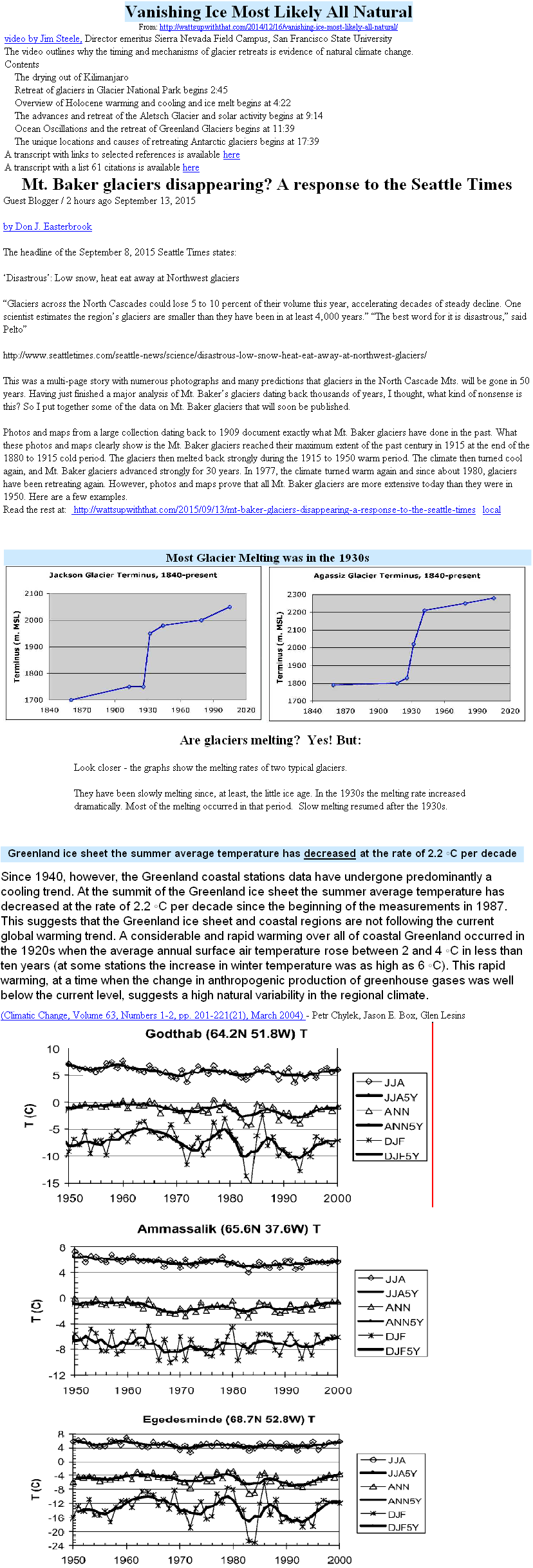
Glacier started retreat in 1815, fastest in 1914-
before most of man’s CO2
(IPCC says earliest time that man’s CO2 could have affected temperature is 1950)
From US National Park Service Publication:
The Reconstructed Exit Glacier History
With the moraines mapped and the ecesis intervals determined, Cusick could now visit each moraine, sample the oldest trees and determine the age of each moraine. Using the moraine dates, Cusick could reconstruct the history of Exit Glacier and its dramatic retreat up the valley.
The Little Ice Age (LIA) was a time of global cooling from approximately 1350 to 1870 AD. During this time glaciers expanded in the northern regions, moving down the mountains and scouring the vegetation that had been in the valleys below. Park Service personnel recently discovered evidence of a buried forest dating back to at least 1170 AD high in the Forelands near the current glacier’s edge. Exit Glacier advanced from the Harding Icefield during the Little Ice Age, burying this existing forest and advancing to a maximum marked by the terminal moraine dated to 1815.
With the warming trend of the 1800s, Exit Glacier began to retreat from its 1815
maximum. Very slowly, the glacier retreated 230 feet (70 m) from 1815 to 1889, averaging
about 3.1 ft/year (1 m/yr) (see Table 1). The glacier then retreated much more rapidly
between 1889-
The next fifteen years was a period of a slow but s teady retreat, as t he g lacier retreated only 42 ft/yr (13 m/yr). In the years between 1914 and 1917, Exit Glacier experienced its most rapid retreat. In just 3 years, the glacier retreated 908 ft (277 m) or almost a foot per day. From 1917 to 1973, Exit Glacier continued to retreat with periods of slow to moderate retreat. There were five periods of retreat, with the ice melting fastest between 1961 and 1968 (115 ft/yr or 35 m/yr).
During the retreat of Exit Glacier from its Little Ice Age maximum in 1815 until recent times, the glacier has left a series of more than 11 moraines and retreated more than 1.25 miles (2 km). The glacier had an average retreat of roughly 6/10 of a mile each century or one kilometer each century.
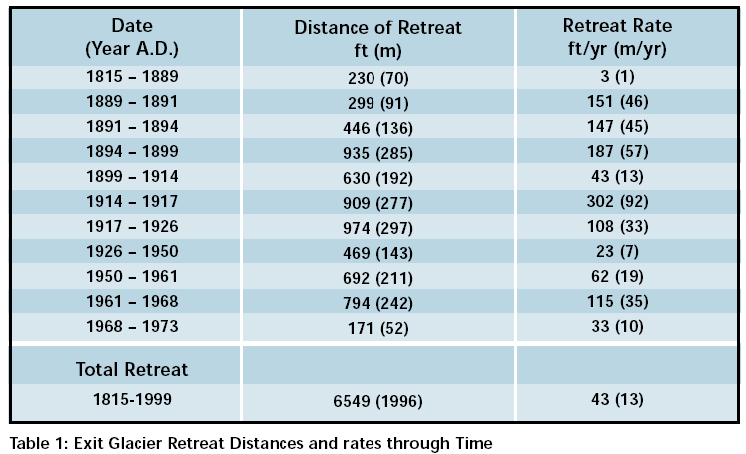
From: http://www.nps.gov/kefj/learn/nature/upload/The%20Retreat%20of%20Exit%20Glacier.pdf (Local)
Tony Heller on Glaciers -
Retreat of Glaciers in Glacier National Park
This USGS page (lcl) is alarm about melting glaciers, but near the bottom of the page we find this:
“Tree-
Since this was before man emitted enough CO2 to affect climate, this very rapid rate of recession was entirely natural. That one fact, shows that all of alarm on this page is simply propaganda:
Glaciers receded FASTER BEFORE MAN EMITTED MUCH CO2
75% Of Total Modern Glacier Melt Occurred Before 1950
(IPCC says that man’s CO2 had little effect before 1950)
“The abrupt climatic transition of the early 20th century and the 25-
Glacial Retreat Before 1910
(IPCC says that man’s CO2 had little effect before 1950)
The Jakobshavn glacier in Greenland retreated more than one foot per day from 1850 to 1903, while thinning by a “considerable extent.” It was also reported that alpine glaciers were in general retreat, and “conclusively that the glaciers of Greenland are receding”
.....
In 1908, National Geographic reported that Alaskan glaciers at Glacier Bay retreated eleven feet per day from 1894 to 1907, during the coldest years on record.
...
USGS reports that Glacier Bay glaciers retreated four feet per day from 1760 to 1907. I annotated the map to show which periods of melting are considered natural by scientists, and which periods are caused by man.
....
In 1910, it was reported that the glaciers of the world had been retreating since at least 1836.
Read the whole article with graphs: https://realclimatescience.com/glacial-
| Warming Stopped |
| NOAA Data |
| NorthWest |
| Oregon |
| Washington |
| Extreme Weather |
| Past Was Warmer |
| NASA: 30's Hotter |
| PastBeliefs |
| HistoryOFAlarmism |
| Central England |
| Temperature History |
| MultiProxy |
| treemometers |
| Northwest Passage |
| Acidification-Ball |
| Acidification-Fulks |
| Acidification-Idso |
| Selected Emails |
| CRU Emails - html formatted |
| CRU Emails Simple Format |
| CRU Emails UnFormatted |
| DCPS paper |
| CRU_Files_Notice |
| False Deadlines |
| Hockey Stick Links |